
Joseph and the Pyramids
Ron Wyatt devoted his life to exploring biblical archaeology, with a particular fascination for the pyramid construction mystery and the possibility that their creation involved biblical figures like Joseph. His groundbreaking research connected the Egyptian master builder Imhotep with Joseph from Genesis, proposing that ancient lifting machines—not lost alien technology—were the key to constructing these monumental structures.



Article created from Ron Wyatt's Youtube Channel: https://youtu.be/rfKb9DOHYGE
Ron Wyatt’s Fascination with Pyramid Construction
Ron Wyatt devoted much of his life to exploring Bible history through archaeology. The pyramids, especially the mystery of their construction, were among his greatest interests. What captured Ron's imagination was not just the size of the pyramids or their lasting presence, but the possibility that their creation involved biblical figures.
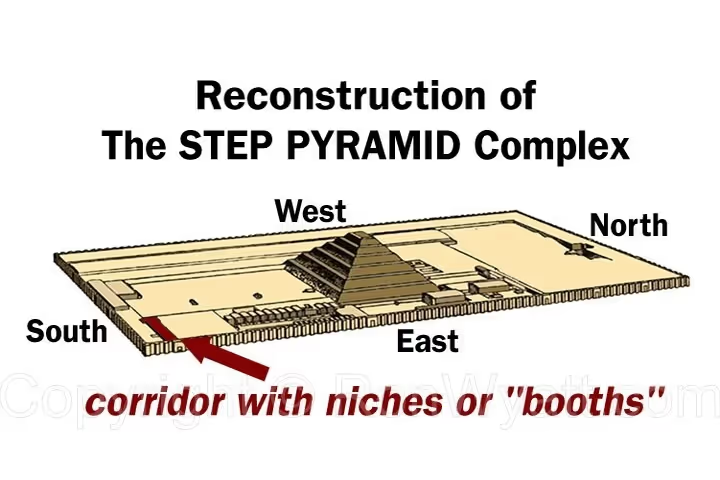
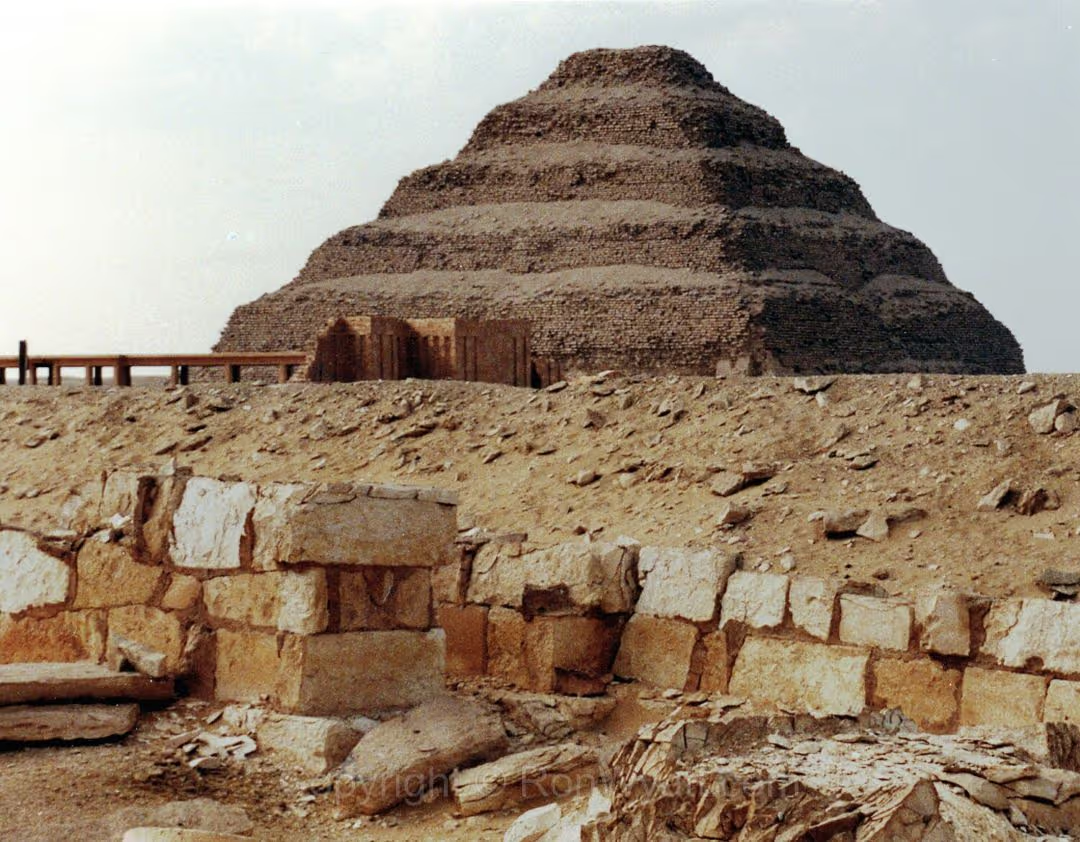
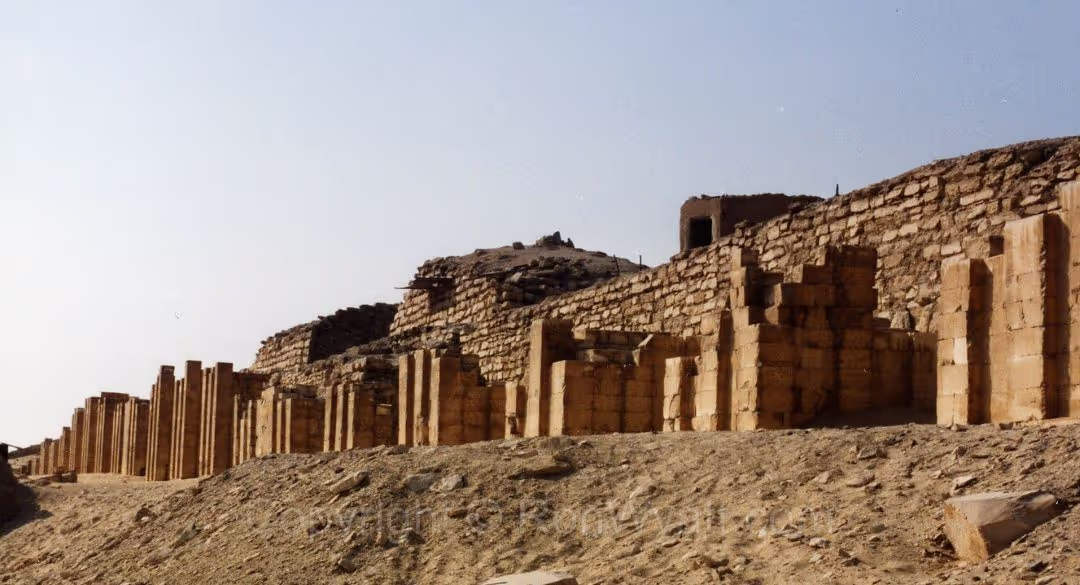
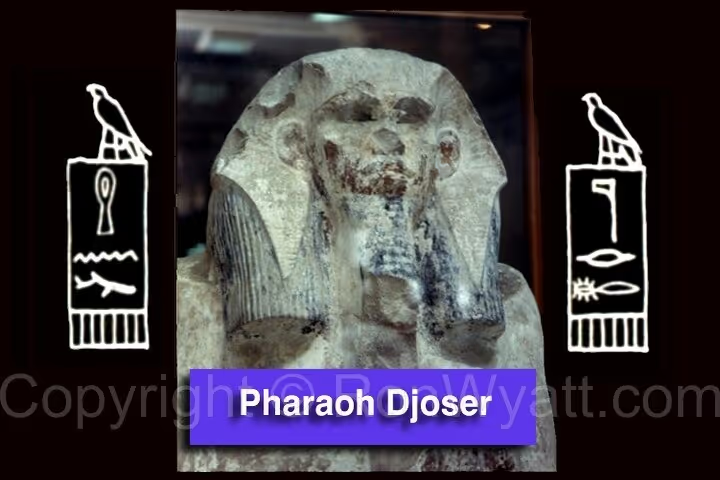
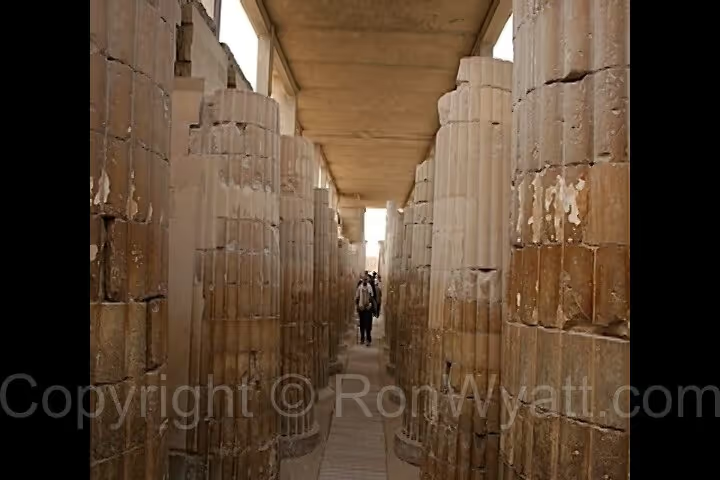
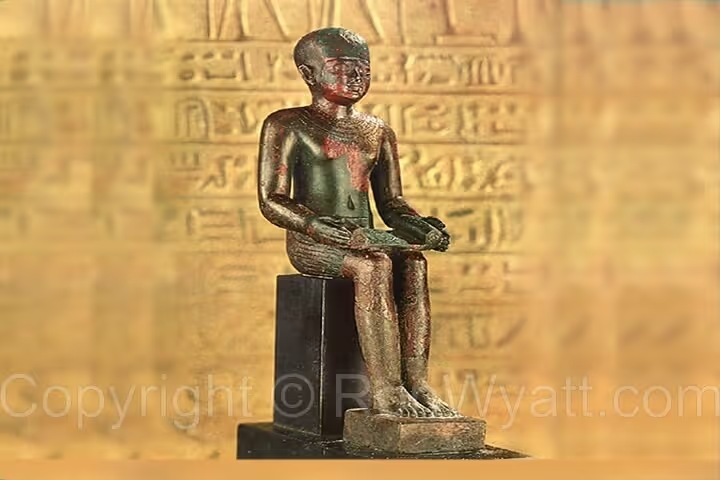
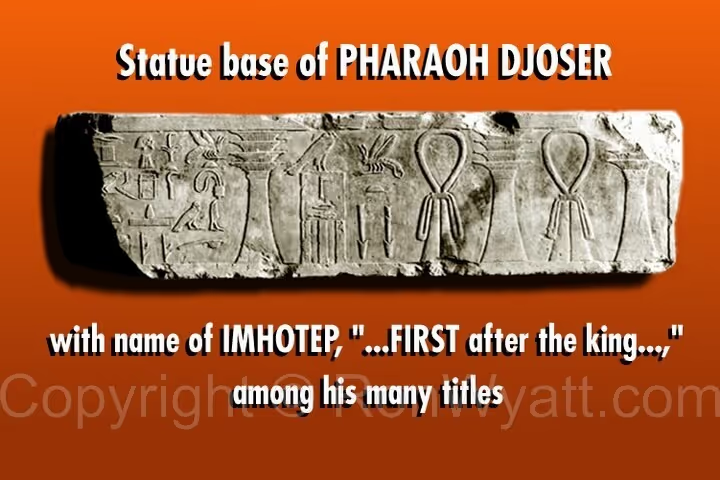
Imhotep stands at the heart of this story. He was known in Egyptian history as an architect, physician, and wise counselor—credited with building the first step pyramid at Saqqara for Pharaoh Djoser and pioneering the use of stone columns. Ron Wyatt became especially interested when he learned ancient sources identified Imhotep not only as a brilliant architect but also as Joseph, the son of Jacob (whose name was changed to Israel in the Bible).
Wyatt believed that early civilizations had inherited pre-flood knowledge handed down through Noah’s family. He argued much of this advanced building wisdom was lost over time, only remnant pieces surviving in the myths and records left for us to decode...
Imhotep and Joseph: A Surprising Connection
Could the Egyptian Imhotep, legendary master builder, be the same person as Joseph from the book of Genesis? According to Ron Wyatt and several lines of evidence, the answer just might be yes.
Here's how these stories overlap:
- Interpreting Pharaoh's Dreams: Imhotep and Joseph were both famed for interpreting Pharaoh’s dreams about famine and plenty.
- Seven Years of Famine and Plenty: Both characters were pivotal during a period marked by abundance, followed by devastating famine (seven years of plenty and seven years of famine).
- Administrative Genius: Joseph, like Imhotep, was put in charge of Egypt’s grain and supplies, rapidly gaining power.
- Family Ties: Joseph was the son of Jacob (who was later called Israel), aligning with Egyptian records of Imhotep's background.
- Rise to Immortality: After his achievements, Joseph/Imhotep received a high honor—immortalized in stone, a typical Egyptian response to greatness.
The overlap in stories and the shared timeline between Bible events and early Egyptian dynasties point toward a single figure. During Joseph’s era, Egypt was made up of loosely tied city-states. After saving the nation from famine, Joseph became the wealthiest person in the region, gathering food supplies not just for Egypt, but also for neighboring lands like Canaan.
The Enduring Mystery: How Were the Pyramids Built?
Even with all our modern technology, building structures that rival the precision and scale of the ancient pyramids would be a massive challenge. Yet thousands of years ago, several cultures managed similar feats.
The big question is: how did they do it without cranes and bulldozers?
Ancient Greek historian Herodotus provided a clue in his writings. He described the pyramids as being built “in steps or tiers or terraces.” When the base was ready, blocks for higher levels were lifted using a contrivance made of short timbers. Each stage had its own lifting device or used a movable one that could be shifted as each level was completed.
Here’s a breakdown of Herodotus’ description:
- Build the pyramid in horizontal layers or steps (tiers).
- Place wooden lifting machines or levers on each tier.
- As the structure grew taller, use the same device or move it upward, repeating the process for each higher level.
- Lift heavy stones from one “story” to the next until reaching the top.
Wyatt also pointed to archaeological finds near the pyramids that supported this theory. For example, the so-called “sun boat” found by the Great Pyramid included several wooden pieces that didn’t fit the boat design. Experts now think these timbers could be remnants of the ancient pyramid-building machines described by Herodotus.
Key Takeaway: Instead of huge ramps or lost technologies, simple wooden machines—anchored on each level—could be the secret to lifting and placing massive stone blocks.
Hieroglyphic Clues from Saqqara: The Pyramid Machines
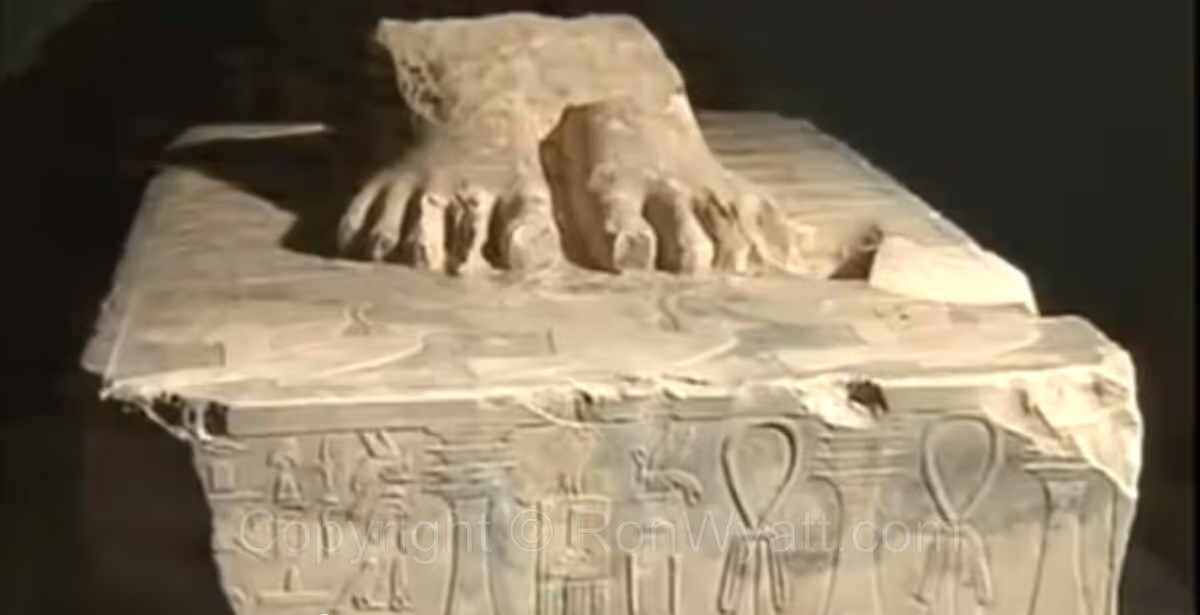
Further support for the lifting machine theory comes from hieroglyphs found at Saqqara, the site of Egypt’s first step pyramid, where Imhotep worked. At the tomb of Onias—an official from Egypt’s Third Dynasty—carvings tell a story in pictures.
Decoding the Cartouche and Hieroglyphs
- The cartouche (a nameplate holding an official’s name) is shown lying on its side. This sign means the person is deceased.
- Symbols inside the cartouche stand upright, showing the gods remain “alive,” transferring their power to the next ruler.
- Alongside the burial and tribute images, there are distinct symbols interpreted as representations of the pyramid building machines. The presence of a spade means burial, a group of lever shapes means “to build,” followed by a pyramid indicating the tomb.
Detailed examination of these glyphs shows a curved lever attached to a rigid base. Seeing only half of the design in a single glyph, researchers imagined a mirrored image, forming a complete lifting device.
Description of the Lifting Device:
- A curved lever is pulled downward.
- As the lever lowers, the base (attached to a load like a stone) rises.
- Repeating this on both sides would form a balanced lifting mechanism—simple but powerful.
Onias's tomb and the glyph sequence:
- Onias passed away (sideways cartouche and burial symbol)
- Symbol of the lifting machine ("to build")
- Pyramid symbol (the actual tomb)
- Offerings to the deceased, shown for the afterlife
These findings make a strong visual case that Egyptians really did use devices matching Herodotus’ descriptions.
Building and Testing the Lifting Machines
To move beyond theory, Wyatt and his team built and tested a version of the ancient lifting contrivance. Instead of stone, they used a compact car with a similar weight to typical pyramid blocks.
Experiment Highlights
- Three sets of wooden levers (the “lifting machines”) were arranged in a step formation.
- Using the levers, the team successfully lifted the car, showing these devices could handle heavy weights.
- An engineer estimated that a full-sized wooden machine could lift up to 500 tons as high as 60 feet, depending on beam strength and setup.
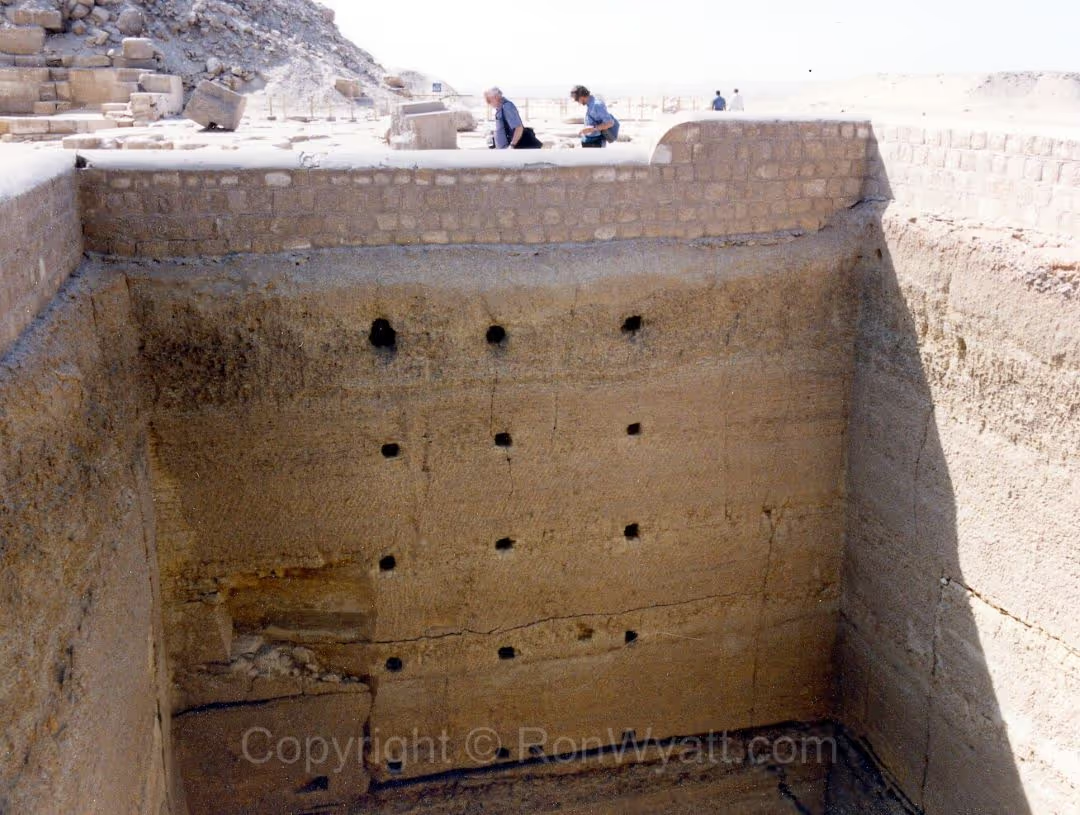
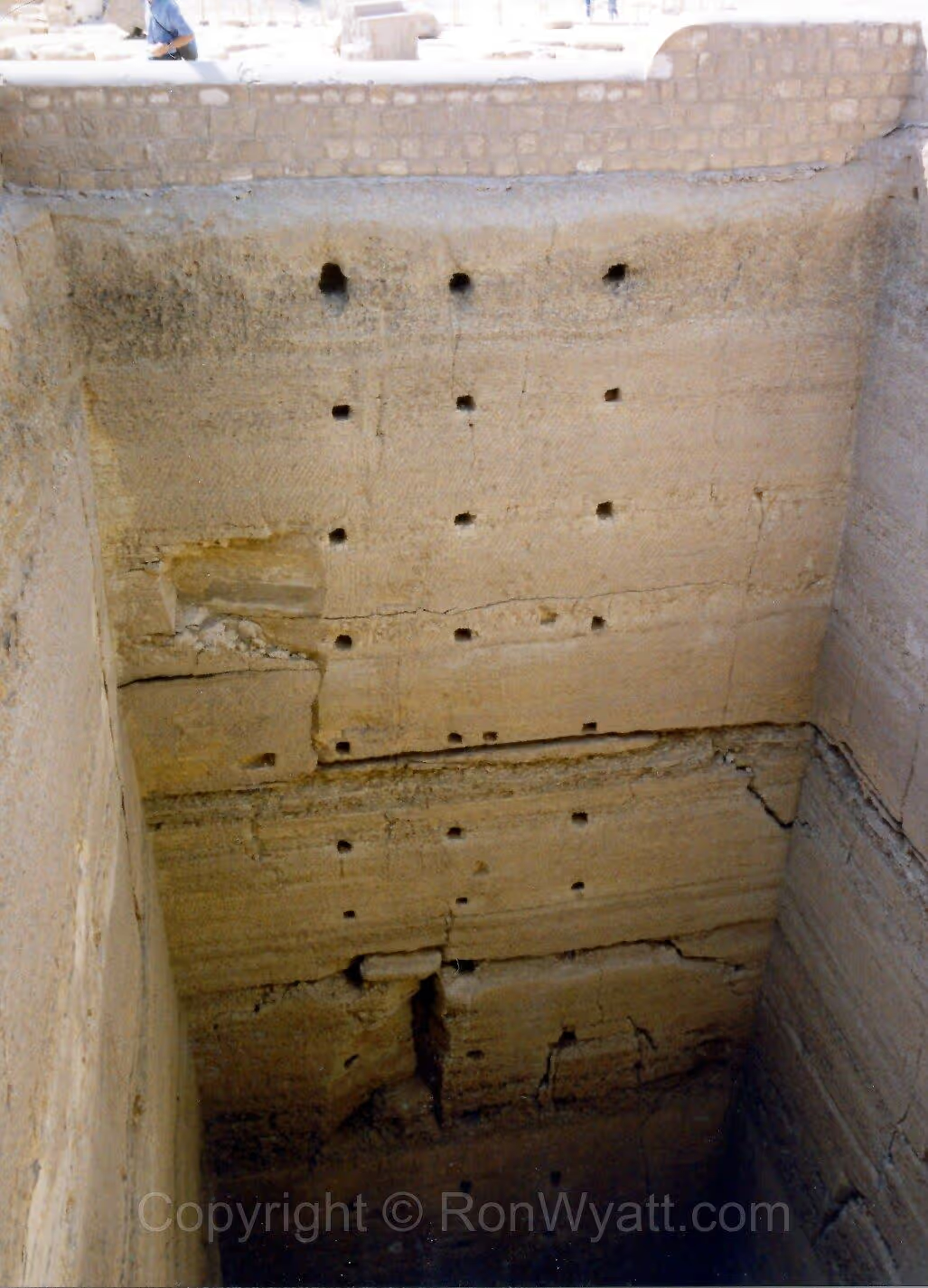
- Around the bases of the pyramids, researchers found clusters of holes drilled into the stone. These holes match points where machines could be anchored securely while lifting massive blocks.
What makes this important?
- The experiment shows that complex technology wasn’t required—just clever use of simple tools.
- If a small team today can lift a car with levers, ancient builders (with hundreds of workers and more time) could easily use wooden machines to move stones up the side of a pyramid.
Comments from Experts
Hassan, the Director of Antiquities in Egypt, reviewed the demonstration. He agreed the method and machines described matched both the ancient records and the physical evidence. According to Hassan, the devices could have been made from wood or other materials, and their presence is hinted at by the symbols left behind.
The Step-by-Step Process for Raising Pyramid Stones
Building pyramids wasn’t just about having the machines. It was about thoughtful process and teamwork. Here’s how the multi-stage lifting process would work:
- Set the First Machine: Place the first lever at the base of the pyramid.
- Lift the Block Up: Use the lever and rope system to raise the stone to the next tier.
- Pass to Next Machine: Slide the stone onto a new machine set at a higher level, using sand beneath to help it move.
- Repeat Steps: Continue moving the stone up using more machines, each bent into position and tied securely with ropes to prevent accidents.
- Secure the Stones: At each tier, workers would slide the block before lifting it again.
- Fill in Gaps: As the structure rose, workers filled in lower steps with specially cut and harder stones, providing protection against weather and erosion.
Because most pyramid stones are about the weight of a small car, only a few machines and a strong crew were needed at each level. For the topmost layers, extra care was taken, since even minor drops could mean damage or injury.
For safety and preservation, Wyatt’s team substituted a cardboard box in place of actual stones during on-site demonstrations. Many surface stones are now loose or missing because later generations removed them for new buildings.
Putting the Pyramid’s Purpose in Historical and Biblical Context
In Joseph’s time, Egypt was a collection of city-states, lacking solid political unity. When famine struck, Joseph’s wise management led to immense wealth and influence. He became famous not only across Egypt but in nearby regions like Canaan. Pharaoh, recognizing Joseph's accomplishments, gave him a chance at immortalization—the creation of a memorial that would last forever.
So Joseph, as Imhotep, designed the first pyramid for Pharaoh Djoser, blending his skills as an administrator, builder, and faithful servant. Such an act was the greatest honor in Egypt, joining the worlds of faith, legacy, and architecture.
Biblical and Egyptian Legacy Building: Parallels
- Commemorating greatness with lasting monuments (pyramids, temples).
- Linking life, death, and the afterlife through burial rituals and grave goods.
- Using grand projects to showcase power and favor from both gods and the pharaoh.
Ron Wyatt’s Personal Journey and Insights
Ron Wyatt never set out to solve the pyramid puzzle. His passion for ancient history and archaeology led him to Egypt, where a visit to Onias’s tomb changed everything. As he viewed the mysterious hieroglyphs, Ron believed that God revealed the meaning—just as He had helped Joseph interpret Pharaoh’s dreams.
For Ron, these experiences were part of a higher calling, fulfilling a purpose hidden for thousands of years. Just as Isaiah and Samuel answered, “Here am I, send me,” Ron followed the path he believed was shown to him.
Key Thought: “God is still looking for people who love Him and are willing to be called according to His purpose. Each of us can be used—if we are simply willing.”
Conclusion
The question of how the pyramids were built has fascinated people for generations. Ron Wyatt’s work offers a hands-on, faith-inspired approach that ties together history, archaeology, and the Bible. By connecting Imhotep and Joseph, showing evidence in ancient texts and carvings, and demonstrating ancient lifting machines in the modern world, he brings new life to an age-old mystery.
Pyramids stand as lasting symbols, not just of Egyptian ingenuity, but perhaps also of faith and the enduring human drive to remember, build, and believe.
If you want to explore these theories further, watch the complete video shared above.